Alternating Days:
We may have sunshine today. We've alternated each day between rain and sun--which I suppose still beats successive days of rain.
The weather pattern is also a good metaphor for the media conditions in Albania. Some days things work and some days they don't.
Newscasts routinely do not end at a fixed, scheduled time. One night the newscast runs 35 minutes. Another night 45.
The Prime Minister blasted the media at a news conference yesterday--accusing two of the stations of having "commentators" on a late night political talk/discussion show who were drunk and making wild charges. These sorts of things are the kind of charges that cause owners to lose licenses and citizens to lose alternative voices to state media because the private owners get sloppy--which happens partly because there is no training, including training to establish ethical standards of conduct.
Because the newscast runs long, on some nights commercials must be dropped because the program time would run long and the late news--10:30PM--would begin late.
Sales people enter a clients office and the first thing the client asks is, "How much is my discount?" Never mind that no discussion has begun as to what the client should buy and for how much. The order takes--they're not SALESpeople when they do this--immediately say, "How about 20% (or 30%)?"
How much does it cost to produce that program I ask television station people? They have no idea. People are assigned to the production staff and paid but there's no cost accounting. If we don't know how much the program costs, how can we make a logical (business like) decision to run the show and how much do we price the ads for?
Can a TV station in Albania make money from a show that costs them $1 million to produce for a short TV season--13 weeks? No. I don't know the value of the TV ad market in Albania--though probably somewhere the data exists--my guess is that all the TV and radio ad spending probably totals between $13 - 16 million--about 9 - 12 million Euros.
Ok....time for the days adventures to begin.
Thursday, March 20, 2008


Friday, March 14, 2008
Just Exhausted: Maybe it is both the miles and years? It's been a tiring trip so far....long work days for the TV station and then back to the hotel to work on my projects.
I went for breakfast a few minutes ago...not knowing whether it was to be served in a downstairs dining area or on the rooftop. It was the rooftop and my-oh-my...my Albanian hosts are tougher than I am. I had on a jacket but still felt cold. I suppose the best part is that it led me to come back to the room to warm up and take a few extra minutes to make this entry. The sun is shining so perhaps we'll have a really nice day.
My breakfast has been the same as in previous years....a couple of cheeses, olives, bread, sliced cucumbers and tomatoes. There are other things as well....some fruit--fresh and canned, almonds, dry cereal and some sweets--packaged cakes/cookies and also a tasty orange pound cake. The coffee has been good--filter coffee. (Somewhere in the blog--probably around April or May 2006, I think there's even a picture I made of a breakfast plate.)
An American friend, here doing news training, is staying at the Sheraton. They serve a typical American style breakfast buffet. I may actually go over there one morning just to have something different.
Tirana is much improved from two years ago. Street construction has been completed in the center of town. There are more shops open--and, more importantly, many of the places that were open before are still in business. I regard that as a mark of economic health. There's a grocery chain operating in the city called EuroMarket....it's pretty nice. The stores have good lighting, are well stocked and are clean. There are so few things to buy that I typically resort to a grocery store trip to find some presents for my family.
Politically, things are generally improving as well. The government moves slowly to reform but at least there is some movement. People tell me, "Yes, life is better today than two years ago."
My TV station has a new investment company that is building a fiber-optic ring around the city. They already offer high speed Internet but, by September, they will offer Internet, cable TV and telephone service. While the hardware and software for the system can be expensive, the labor and installation is somewhat cheaper. I suspect they'll build the company and then sell to a global telecom company once it has a market presence.
I went for breakfast a few minutes ago...not knowing whether it was to be served in a downstairs dining area or on the rooftop. It was the rooftop and my-oh-my...my Albanian hosts are tougher than I am. I had on a jacket but still felt cold. I suppose the best part is that it led me to come back to the room to warm up and take a few extra minutes to make this entry. The sun is shining so perhaps we'll have a really nice day.
My breakfast has been the same as in previous years....a couple of cheeses, olives, bread, sliced cucumbers and tomatoes. There are other things as well....some fruit--fresh and canned, almonds, dry cereal and some sweets--packaged cakes/cookies and also a tasty orange pound cake. The coffee has been good--filter coffee. (Somewhere in the blog--probably around April or May 2006, I think there's even a picture I made of a breakfast plate.)
An American friend, here doing news training, is staying at the Sheraton. They serve a typical American style breakfast buffet. I may actually go over there one morning just to have something different.
Tirana is much improved from two years ago. Street construction has been completed in the center of town. There are more shops open--and, more importantly, many of the places that were open before are still in business. I regard that as a mark of economic health. There's a grocery chain operating in the city called EuroMarket....it's pretty nice. The stores have good lighting, are well stocked and are clean. There are so few things to buy that I typically resort to a grocery store trip to find some presents for my family.
Politically, things are generally improving as well. The government moves slowly to reform but at least there is some movement. People tell me, "Yes, life is better today than two years ago."
My TV station has a new investment company that is building a fiber-optic ring around the city. They already offer high speed Internet but, by September, they will offer Internet, cable TV and telephone service. While the hardware and software for the system can be expensive, the labor and installation is somewhat cheaper. I suspect they'll build the company and then sell to a global telecom company once it has a market presence.
Sunday, March 9, 2008
I'M BACK: After almost two years away, I'm back in one of my favorite cities, Tirana, Albania, at Hotel President. I'm here to work with a couple of privately owned television stations in Albania--Vizion+ and Top Channel.
Tirana has changed--the first thing I've noticed is that the streets are mostly paved...though there's a lot of construction going on still, including an effort to build a gigantic traffic interchange that will improve the routing of vehicles at a couple of major intersections in the city. I've come to believe it's just better to build the interchange than to try to put in place traffic lights and conventional intersections. People here just don't seem to obey those conventional measures.
Commercial broadcasting gets taken for granted in the U.S. All we want is to watch our favorite entertainment shows but where would we be if we didn't have those stations covering local and national news? Life for most Americans is so good they don't worry much about the news--indeed, network news viewing is declining and has its highest audience among persons 55 and older. But, we can turn on the TV and see a newscast that we can believe is truthful and fair. There certainly are partisan stories from time to time but generally we get a balanced look at the world.
What about newspaper you say? Yes, newspapers really are more important to the coverage of routine local news--city council and local gov't stuff that isn't visual enough for TV. And, they're sometimes the sort of stories TV people are barely smart enough to know how to cover when you consider that a local TV reporter in a small market has little connection to the town.
It's different in Albania. There are many newspapers being published but many sell very few copies and they are expensive for the local readers. Television is the news voice that is free for the audience and it does serve as a check against government actions. Private television is especially important. Government TV was (and is) the voice of the government and that seldom means it's a free, independent, fair/accurate news voice--though maybe that can/will change. Anyway, I'll spend time offering ideas to help the stations run more effectively to improve their service and perhaps improve their profits.
Tirana has changed--the first thing I've noticed is that the streets are mostly paved...though there's a lot of construction going on still, including an effort to build a gigantic traffic interchange that will improve the routing of vehicles at a couple of major intersections in the city. I've come to believe it's just better to build the interchange than to try to put in place traffic lights and conventional intersections. People here just don't seem to obey those conventional measures.
Commercial broadcasting gets taken for granted in the U.S. All we want is to watch our favorite entertainment shows but where would we be if we didn't have those stations covering local and national news? Life for most Americans is so good they don't worry much about the news--indeed, network news viewing is declining and has its highest audience among persons 55 and older. But, we can turn on the TV and see a newscast that we can believe is truthful and fair. There certainly are partisan stories from time to time but generally we get a balanced look at the world.
What about newspaper you say? Yes, newspapers really are more important to the coverage of routine local news--city council and local gov't stuff that isn't visual enough for TV. And, they're sometimes the sort of stories TV people are barely smart enough to know how to cover when you consider that a local TV reporter in a small market has little connection to the town.
It's different in Albania. There are many newspapers being published but many sell very few copies and they are expensive for the local readers. Television is the news voice that is free for the audience and it does serve as a check against government actions. Private television is especially important. Government TV was (and is) the voice of the government and that seldom means it's a free, independent, fair/accurate news voice--though maybe that can/will change. Anyway, I'll spend time offering ideas to help the stations run more effectively to improve their service and perhaps improve their profits.
Monday, November 19, 2007
Manas Airport
I rarely sleep well before an early morning flight and this morning was not an exception. I just worry too much about oversleeping. My wake-up call was for 4:30 AM. I awoke about 3:15—I did get to see an interesting news story on BBC about the Rory Peck Trust. The Trust exists to support freelance newsgatherers and their families worldwide in times of need, and to promote their welfare and safety. Often these times of need include death, kidnapping or injury of freelancers. (See http://www.rorypecktrust.org/ for information.)
It’s an hour before departure and time to sit and sit and sit. The good news is that I’m heading home and while this has been a good trip, I am ready to get back.
Kyrgyzstan has been interesting study—it’s such a different location from past trips. The people officially speak Russian—though on the streets I could probably hear Kyrgyz if I were in the right location. The Kyrgyz people have such as Asian look that it seems so odd that they’d speak Russian. Kyrgyzstan shares a common land border to the east with China but it is surrounded by other countries that were part of the U.S.S.R.’s Central Asian Republics—The ‘Stans.
The government changed about a year ago with the Tulip Revolution—protesting citizens, frustrated with an unfair election forced the president out of power. The new guy, some people say, hasn’t really done much to advance the country except give a new segment of the population a chance to get rich. The person who told me this was quick to add that at least another segment of the population was able to get wealthy. The poor, as always, are still poor. Whether the U.S. or Kyrgyzstan, there’s little “trickle-down” wealth as Ronald Reagan once claimed of his economic policies that bolstered incomes of the wealthiest.
Freedom House proclaims the media as unfree though within the region, Kyrgyzstan has more political and social freedom than neighboring countries. I’ve heard interesting stories of other countries where the secret police actively watch the people. I’m sure there are secret police on the streets here but my little visit was nothing to draw their attention.
I just heard the clink of bottles. A Kyrgyz businessman, neatly dressed, is carrying a bag loaded with booze of some sort. Even though it’s early morning, the bar was busy with people having a morning drink of something other than coffee—perhaps to fortify their nerves. A guy just sat down next to me with a Baltica 7. (The numbers reference the strength of the beer—a number 3 that I’m bringing home is a nice lager.)
It has been interesting to look at the disparity in the country. There’s an Ikea store here as well as United Colors of Benetton. I even saw a sign for a Baskin Robbins. And, local inventions, McDs Burgers and New York Pizza (I had a couple of slices of their pizza….very good…though I would have liked some tomato sauce.) Who can afford these things? There are lots of casinos. Flower shops sell imported roses and other flowers. There’s a construction boom as well. Local talk suggests that between 500,000 and one million Kyrgyz work outside the country and send a lot of money home. This is pretty common and takes place throughout South American, Africa and Eastern Europe. So why should it be any different in Central Asia.
-0-
Update:
I'm in Moscow. The flight from Bishkek departed late but made it with time to spare. It's nice to have the WiFi access though I was unable to get into the Crown Room--even when I offered to pay. (Though I wouldn't have actually paid...not $25 for for a Coke and snacks. I'm across the hall borrowing their WiFi.
I will sleep in my own bed tonight.
I rarely sleep well before an early morning flight and this morning was not an exception. I just worry too much about oversleeping. My wake-up call was for 4:30 AM. I awoke about 3:15—I did get to see an interesting news story on BBC about the Rory Peck Trust. The Trust exists to support freelance newsgatherers and their families worldwide in times of need, and to promote their welfare and safety. Often these times of need include death, kidnapping or injury of freelancers. (See http://www.rorypecktrust.org/ for information.)
It’s an hour before departure and time to sit and sit and sit. The good news is that I’m heading home and while this has been a good trip, I am ready to get back.
Kyrgyzstan has been interesting study—it’s such a different location from past trips. The people officially speak Russian—though on the streets I could probably hear Kyrgyz if I were in the right location. The Kyrgyz people have such as Asian look that it seems so odd that they’d speak Russian. Kyrgyzstan shares a common land border to the east with China but it is surrounded by other countries that were part of the U.S.S.R.’s Central Asian Republics—The ‘Stans.
The government changed about a year ago with the Tulip Revolution—protesting citizens, frustrated with an unfair election forced the president out of power. The new guy, some people say, hasn’t really done much to advance the country except give a new segment of the population a chance to get rich. The person who told me this was quick to add that at least another segment of the population was able to get wealthy. The poor, as always, are still poor. Whether the U.S. or Kyrgyzstan, there’s little “trickle-down” wealth as Ronald Reagan once claimed of his economic policies that bolstered incomes of the wealthiest.
Freedom House proclaims the media as unfree though within the region, Kyrgyzstan has more political and social freedom than neighboring countries. I’ve heard interesting stories of other countries where the secret police actively watch the people. I’m sure there are secret police on the streets here but my little visit was nothing to draw their attention.
I just heard the clink of bottles. A Kyrgyz businessman, neatly dressed, is carrying a bag loaded with booze of some sort. Even though it’s early morning, the bar was busy with people having a morning drink of something other than coffee—perhaps to fortify their nerves. A guy just sat down next to me with a Baltica 7. (The numbers reference the strength of the beer—a number 3 that I’m bringing home is a nice lager.)
It has been interesting to look at the disparity in the country. There’s an Ikea store here as well as United Colors of Benetton. I even saw a sign for a Baskin Robbins. And, local inventions, McDs Burgers and New York Pizza (I had a couple of slices of their pizza….very good…though I would have liked some tomato sauce.) Who can afford these things? There are lots of casinos. Flower shops sell imported roses and other flowers. There’s a construction boom as well. Local talk suggests that between 500,000 and one million Kyrgyz work outside the country and send a lot of money home. This is pretty common and takes place throughout South American, Africa and Eastern Europe. So why should it be any different in Central Asia.
-0-
Update:
I'm in Moscow. The flight from Bishkek departed late but made it with time to spare. It's nice to have the WiFi access though I was unable to get into the Crown Room--even when I offered to pay. (Though I wouldn't have actually paid...not $25 for for a Coke and snacks. I'm across the hall borrowing their WiFi.
I will sleep in my own bed tonight.
Saturday, November 17, 2007
Oh The Things You’ll See:
It is Saturday morning. I’m waiting for the instructor to arrive to open the classroom door so that we can start the morning class. After this class, I’ll meet with about 18-20 university students.
This trip has been hectic; the schedule busy but productive. I’ve not quite gotten into the swing of the time change—12 hours. The good thing is that I’ve adopted a strategy my friend Bojan recommended in Serbia: when you get back to you’re hotel, lie down and rest—sleep if you can. Then start your evening activities.
Last night I had a rare social experience. I met up with two AUCA faculty members and some of their friends for an evening of food, beer and conversation. There were seven of us—one Kyrgyz, a German and five Americans. Originally, we were going to a rock club a short distance from town but when were arrived—Sam, Aiday and me—we found out the band playing that night, a group of Russian Rockers, commanded the high price of 500 Som to stand and 1,500 Som to sit and listen. That’s about $15 to stand in a crowded, smoke-filled room and have your eardrums melt. I was glad we picked another option.
We went to a restaurant-club called “Sweet Sixties” that featured a cover band that knew about 10 songs. Smoke on the Water, Blue Suede Shoes and Cocaine were three of the songs that I remember. There were some other ballads that I vaguely knew. Even though the songs—Blue Suede for example—are almost 50 years old the crowd of young and old Kyrgyz danced and sang along as though they were current hits.
The restaurant's menu was glued to old LPs. The flip side of one record didn't have amenu page so you could see the Russian LP title which roughly translated, "We're proud to be Communists." Oh the irony of this record now being used to present the menu of this capitalist restaurant featuring Western cuisine and rock music.
-0-
Ultimate Frisbee
I tagged along with Sam to the AUCA Ultimate Frisbee Team practice session after class. (A few months back, the team played another school for the Central Asia Championship and won both matches. Of course, there are only two CA teams so I suppose the defeated team hold second place.) Sam tells me the game is especially popular in Central Asia. When he was a Peace Corps volunteer in Turkmenistan, people played the game and thought of it as American. Like football, there are end zones for scoring. There’s a throw-off (kick-off). The Frisbee possession continues down the field if your team successfully throws the Frisbee from person-to-person without a drop. If dropped, the other team gets possession and reverses course down the field. It was fun though the guys I played with (and against) were less than half my age. They were great to meet and really impressive not just in Frisbee but they were smart, articulate and well traveled. One journalism grad of AUCA had completed a semester at Syracuse and a Scripps-Howard internship in D.C. (Trust me, that’s a highly competitive internship.)
I met the son of an American missionary couple—they’re in South Africa--he's here and part of the Frisbee team. Todd was born in Zimbabwe and is working on some youth recreation projects in Kyrgyzstan. We compared thoughts about Robert Mugabwe. I can’t imagine finding someone in my usual circle to have this kind of talk with.
It is Saturday morning. I’m waiting for the instructor to arrive to open the classroom door so that we can start the morning class. After this class, I’ll meet with about 18-20 university students.
This trip has been hectic; the schedule busy but productive. I’ve not quite gotten into the swing of the time change—12 hours. The good thing is that I’ve adopted a strategy my friend Bojan recommended in Serbia: when you get back to you’re hotel, lie down and rest—sleep if you can. Then start your evening activities.
Last night I had a rare social experience. I met up with two AUCA faculty members and some of their friends for an evening of food, beer and conversation. There were seven of us—one Kyrgyz, a German and five Americans. Originally, we were going to a rock club a short distance from town but when were arrived—Sam, Aiday and me—we found out the band playing that night, a group of Russian Rockers, commanded the high price of 500 Som to stand and 1,500 Som to sit and listen. That’s about $15 to stand in a crowded, smoke-filled room and have your eardrums melt. I was glad we picked another option.
We went to a restaurant-club called “Sweet Sixties” that featured a cover band that knew about 10 songs. Smoke on the Water, Blue Suede Shoes and Cocaine were three of the songs that I remember. There were some other ballads that I vaguely knew. Even though the songs—Blue Suede for example—are almost 50 years old the crowd of young and old Kyrgyz danced and sang along as though they were current hits.
The restaurant's menu was glued to old LPs. The flip side of one record didn't have amenu page so you could see the Russian LP title which roughly translated, "We're proud to be Communists." Oh the irony of this record now being used to present the menu of this capitalist restaurant featuring Western cuisine and rock music.
-0-
Ultimate Frisbee
I tagged along with Sam to the AUCA Ultimate Frisbee Team practice session after class. (A few months back, the team played another school for the Central Asia Championship and won both matches. Of course, there are only two CA teams so I suppose the defeated team hold second place.) Sam tells me the game is especially popular in Central Asia. When he was a Peace Corps volunteer in Turkmenistan, people played the game and thought of it as American. Like football, there are end zones for scoring. There’s a throw-off (kick-off). The Frisbee possession continues down the field if your team successfully throws the Frisbee from person-to-person without a drop. If dropped, the other team gets possession and reverses course down the field. It was fun though the guys I played with (and against) were less than half my age. They were great to meet and really impressive not just in Frisbee but they were smart, articulate and well traveled. One journalism grad of AUCA had completed a semester at Syracuse and a Scripps-Howard internship in D.C. (Trust me, that’s a highly competitive internship.)
I met the son of an American missionary couple—they’re in South Africa--he's here and part of the Frisbee team. Todd was born in Zimbabwe and is working on some youth recreation projects in Kyrgyzstan. We compared thoughts about Robert Mugabwe. I can’t imagine finding someone in my usual circle to have this kind of talk with.
Monday, November 12, 2007
The People You Meet:
I enjoy meeting people when I travel. The opportunity for conversation with an extended meeting. Finding out how they've lived and what they think. My extended meetings will take place once I'm in Bishkek.
There are also the chance meetings. I met Mike, a retired military person who's from Texas but now lives near Atlanta and is going to Tashkent to see an Uzbek women he met through the Internet. He was there about a year ago. The paperwork to enable her to travel to the U.S. has taken longer than he expected.
I met the odd business traveler--with some sort of investment firm who is traveling to Delhi, India; Korea, Hong Kong, back to Korea, Minneapolis and finally back to Atlanta. This entire trip is a quick one...11 days for all of those cities...and his only luggage was a pretty big carry-on bag.
I met the guy from Canada, who in a Political Science Ph.D. program at U of Florida, also going to India but to gather dissertation data.
There's Alex and Alex--husband and wife with variations of the same first name. She's from Moldova and he's from Uzbekistan--where they're in transit to visit his family. They both live in the U.S., in Springfield, MO, after immigrating to the states 8 years ago for her and 11 years ago for him. Alex speaks Russian so she was helpful in getting a person to move us through the transit-with-no-visa line.
Lastly, I met Steve...one of the millions of American citizens working on our behalf to ensure we can live safely. Steve's a "nuke hunter". He's made over 30 trips to Russia on behalf of the U.S. government in an effort to locate and secure nuclear materials. Some of the material is from dismantled nuclear weapons. Other materials comes from medical or other research facilities. There's always a risk that someone with money and the desire to hurt someone will steal or buy this sort of material, whether to make a nuclear weapon or create a dirty bomb. We had a great conversation about national and world politics--including Pakistan....a scary place now that the country may be imploding. Sunday was Veteran's Day and I'm proud of the sacrifices veterans have made but I also think about the millions of others who put themselves in odd circumstances in an effort to keep us safe.
Not to sound too much like Forest Gump but when you travel, you never know who you'll meet.
I enjoy meeting people when I travel. The opportunity for conversation with an extended meeting. Finding out how they've lived and what they think. My extended meetings will take place once I'm in Bishkek.
There are also the chance meetings. I met Mike, a retired military person who's from Texas but now lives near Atlanta and is going to Tashkent to see an Uzbek women he met through the Internet. He was there about a year ago. The paperwork to enable her to travel to the U.S. has taken longer than he expected.
I met the odd business traveler--with some sort of investment firm who is traveling to Delhi, India; Korea, Hong Kong, back to Korea, Minneapolis and finally back to Atlanta. This entire trip is a quick one...11 days for all of those cities...and his only luggage was a pretty big carry-on bag.
I met the guy from Canada, who in a Political Science Ph.D. program at U of Florida, also going to India but to gather dissertation data.
There's Alex and Alex--husband and wife with variations of the same first name. She's from Moldova and he's from Uzbekistan--where they're in transit to visit his family. They both live in the U.S., in Springfield, MO, after immigrating to the states 8 years ago for her and 11 years ago for him. Alex speaks Russian so she was helpful in getting a person to move us through the transit-with-no-visa line.
Lastly, I met Steve...one of the millions of American citizens working on our behalf to ensure we can live safely. Steve's a "nuke hunter". He's made over 30 trips to Russia on behalf of the U.S. government in an effort to locate and secure nuclear materials. Some of the material is from dismantled nuclear weapons. Other materials comes from medical or other research facilities. There's always a risk that someone with money and the desire to hurt someone will steal or buy this sort of material, whether to make a nuclear weapon or create a dirty bomb. We had a great conversation about national and world politics--including Pakistan....a scary place now that the country may be imploding. Sunday was Veteran's Day and I'm proud of the sacrifices veterans have made but I also think about the millions of others who put themselves in odd circumstances in an effort to keep us safe.
Not to sound too much like Forest Gump but when you travel, you never know who you'll meet.
I'm in Moscow but just in transit...meaning, I'm waiting on my connecting flight.
You need a visa to enter Russia from the U.S. and apparently anywhere else. While it might have been possible to try for one, I didn't worry about it. It's a long day of hanging out at the airport but I can handle it--I think.
The last time I had a layover like this i was a lot younger...1994...my first trip to Zambia and the layover was in London. I caught the Tube and spent the day at a couple of museums. Even if I could have gotten in, it was about 27 degrees outside when I arrived and it just looked cold.
You need a visa to enter Russia from the U.S. and apparently anywhere else. While it might have been possible to try for one, I didn't worry about it. It's a long day of hanging out at the airport but I can handle it--I think.
The last time I had a layover like this i was a lot younger...1994...my first trip to Zambia and the layover was in London. I caught the Tube and spent the day at a couple of museums. Even if I could have gotten in, it was about 27 degrees outside when I arrived and it just looked cold.
Sunday, November 11, 2007
I'm off again. of course some people say I'm "off" because I travel where I do and enjoy it. I last blogged about a trip to Romania. It proved to be an especially worthwhile trip.
I consulted with Radio Bucharest and Radio Constanta about programming, sales, personnel, branding/station marketing. Lots of good conversations and with two stations that seemed interested in learning new things.
Today, I am traveling to Bishkek, Kyrgystan. Kyrgyzstan is in Central Asia. I fly to Moscow, directly on a Delta flight then connect with Aeroflot for my flight to Bishkek. I'm sitting in the Peoria Airport awaiting departure.
In Bishkek, I'll be working with American University Central Asia, a Soros Foundation supported university. It's awazing to read about the number of Soros funded projects around the world. They range from universities to community development projects.
They've given us the call to board. I'll try to add more comments along the way.
I consulted with Radio Bucharest and Radio Constanta about programming, sales, personnel, branding/station marketing. Lots of good conversations and with two stations that seemed interested in learning new things.
Today, I am traveling to Bishkek, Kyrgystan. Kyrgyzstan is in Central Asia. I fly to Moscow, directly on a Delta flight then connect with Aeroflot for my flight to Bishkek. I'm sitting in the Peoria Airport awaiting departure.
In Bishkek, I'll be working with American University Central Asia, a Soros Foundation supported university. It's awazing to read about the number of Soros funded projects around the world. They range from universities to community development projects.
They've given us the call to board. I'll try to add more comments along the way.
Tuesday, October 2, 2007
Romania bound:
I leave next week for Romania, my second trip in about a year. I'll be working with managers of local/regional radio stations--all part of the old national or state radio broadcasting service in Romania. This was the government voice that controlled the citizens in the days of dictator Nicolae Ceausescu.
Even now, Radio Romania is not completely free of government influence--and you can understand why. If you're raised in a country where the media system is controlled by the government, it's difficult to give it complete freedom even when you're part of a newly elected, emerging government that strives to be democratic. Who in U.S. government wouldn't want to have a say in news coverage or news agendas--if they could get away with it under the laws of the country and past traditions.
Thank goodness for the First Amendment and its ability to create a wall of separation between government and media.
Freedom House (freedomhouse.org) reported in the 2006 Press Freedom report:
"The constitution protects freedom of the press, and the government is increasingly respectful of these rights. The Parliament adopted a new criminal code in June, under which libel is no longer a felony and slander is still considered a criminal offense but is no longer punishable with imprisonment. However, the new code has yet to be enacted. In October, the justice minister proposed further amendments to completely decriminalize slander."
AND
"The number of media outlets and news sources increased in 2005, and media are becoming more active and self-sufficient. But media still face significant economic pressure thanks to ownership concentration, lack of revenue, and a limited advertising market. Most media rely on government-funded advertising. In May, in consultation with media groups, the government adopted reforms to make advertising allocation more transparent, a move intended to prevent officials from distributing advertising to favored media outlets. Concentration and lack of transparency of media ownership remain serious concerns. "
Romania is regarded by Freedom House as FREE...though both the political rights and civil rights scores are 2. The lowest possible score is 7, a Not Free society. The U.S. and Western Europe rank one in both categories. While many things still must be done, Romania has made substantial progress. As recently as 1995-1996, the scores were 4 and 3; from the 1970s until 1990, Romania typically scored 7 in both categories.
More about Romania from the road...
I leave next week for Romania, my second trip in about a year. I'll be working with managers of local/regional radio stations--all part of the old national or state radio broadcasting service in Romania. This was the government voice that controlled the citizens in the days of dictator Nicolae Ceausescu.
Even now, Radio Romania is not completely free of government influence--and you can understand why. If you're raised in a country where the media system is controlled by the government, it's difficult to give it complete freedom even when you're part of a newly elected, emerging government that strives to be democratic. Who in U.S. government wouldn't want to have a say in news coverage or news agendas--if they could get away with it under the laws of the country and past traditions.
Thank goodness for the First Amendment and its ability to create a wall of separation between government and media.
Freedom House (freedomhouse.org) reported in the 2006 Press Freedom report:
"The constitution protects freedom of the press, and the government is increasingly respectful of these rights. The Parliament adopted a new criminal code in June, under which libel is no longer a felony and slander is still considered a criminal offense but is no longer punishable with imprisonment. However, the new code has yet to be enacted. In October, the justice minister proposed further amendments to completely decriminalize slander."
AND
"The number of media outlets and news sources increased in 2005, and media are becoming more active and self-sufficient. But media still face significant economic pressure thanks to ownership concentration, lack of revenue, and a limited advertising market. Most media rely on government-funded advertising. In May, in consultation with media groups, the government adopted reforms to make advertising allocation more transparent, a move intended to prevent officials from distributing advertising to favored media outlets. Concentration and lack of transparency of media ownership remain serious concerns. "
Romania is regarded by Freedom House as FREE...though both the political rights and civil rights scores are 2. The lowest possible score is 7, a Not Free society. The U.S. and Western Europe rank one in both categories. While many things still must be done, Romania has made substantial progress. As recently as 1995-1996, the scores were 4 and 3; from the 1970s until 1990, Romania typically scored 7 in both categories.
More about Romania from the road...
Thursday, September 6, 2007
Are things better in Zambia than they were 10 years ago?
It's tough for a foreign visitor to know whether things are truly better in Zambia but at first glance, some things are clearly better. Roads are paved and have been widened. New retail businesses have opened. More people own cars than before--traffic can be pretty bad in the afternoon. I saw a couple of sidewalk vendors selling cut flowers--not the sort of fancy stuff that might be marketed to foreigners....but simple handfuls or small bundles of flowers that an ordinary Zambian could buy. And, I could see that the sellers had been successful. That's a real statement about the quality of life when people have money for flowers--a luxury good.
How about press freedom and media? Are things better? I would say yes. More private media firms are operating--there are around 30 on-air commercial or community radio stations around the country. Ten years ago, besides ZNBC, there were only three FM stations on the air in the country. All three of these are still around and prospering.
The Post newspaper, now more than 10 years old, looks successful. The print reproduction quality is very good; it's full color. The Daily Mail routinely has spot color. The Times of Zambia seems to be the weakest paper of the big three. And, let me clarify and tell you the news content of The Post is still strong--yes, there are some sensational stories and they've learned to package some stories that will sell papers--such as the recent and continuing controversy in Zambia over whether it's appropriate for women to wear two piece bathing suits in a beauty contest. The Post made a point to include contestant photos in the event people had not made up their minds.
Both The Daily Mail and The Times continue to carry the burden of the MMD, the ruling party, when it comes to selecting newspaper stories. But, newspaper coverage still seems better than 10 years ago. Newspapers are expensive--more so now than before. A paper costs about 75 cents...up from less than 50 cents before. And, the number of ad pages--at least in The Post--has increased. (The Post will let you read headlines online but you must now pay for full content access. Go to www.zamnet.zm for access to the newspapers.)
ZNBC TV looks as tired as ever. Production value in the television programs I saw was weak. The news content and delivery needs help. Basic skills seem to be lacking among some of their staffers--though realistically it may also be that management simply doesn't want individual doing too many things. Even 10 years ago, ZNBC seemed to be a tough place to work.
I haven't seen specific figures on Zambia's fight against AIDS but a couple of people told me they're making progress. Still, it was so sad to hear of the many people I'd met before who were now dead. Ten years ago, I heard an estimate that one media employee in three was HIV positive--media people, with some degree of celebrity status plus simply a job--were believe to have a higher infection rate than the general population. Perhaps that estimate was true. I use to imagine what it would be like if every third person I shook hands with was positive. Ten years later, I have an idea.
A sad note certainly but what a joy and pleasure to be back in Zambia. I learned so many things 10 years ago and have continued to learn about Zambia, the world and myself because I was there. I don't want my next visit to take 10 years for the return and am now working on a project that perhaps will get me back much sooner.
It's tough for a foreign visitor to know whether things are truly better in Zambia but at first glance, some things are clearly better. Roads are paved and have been widened. New retail businesses have opened. More people own cars than before--traffic can be pretty bad in the afternoon. I saw a couple of sidewalk vendors selling cut flowers--not the sort of fancy stuff that might be marketed to foreigners....but simple handfuls or small bundles of flowers that an ordinary Zambian could buy. And, I could see that the sellers had been successful. That's a real statement about the quality of life when people have money for flowers--a luxury good.
How about press freedom and media? Are things better? I would say yes. More private media firms are operating--there are around 30 on-air commercial or community radio stations around the country. Ten years ago, besides ZNBC, there were only three FM stations on the air in the country. All three of these are still around and prospering.
The Post newspaper, now more than 10 years old, looks successful. The print reproduction quality is very good; it's full color. The Daily Mail routinely has spot color. The Times of Zambia seems to be the weakest paper of the big three. And, let me clarify and tell you the news content of The Post is still strong--yes, there are some sensational stories and they've learned to package some stories that will sell papers--such as the recent and continuing controversy in Zambia over whether it's appropriate for women to wear two piece bathing suits in a beauty contest. The Post made a point to include contestant photos in the event people had not made up their minds.
Both The Daily Mail and The Times continue to carry the burden of the MMD, the ruling party, when it comes to selecting newspaper stories. But, newspaper coverage still seems better than 10 years ago. Newspapers are expensive--more so now than before. A paper costs about 75 cents...up from less than 50 cents before. And, the number of ad pages--at least in The Post--has increased. (The Post will let you read headlines online but you must now pay for full content access. Go to www.zamnet.zm for access to the newspapers.)
ZNBC TV looks as tired as ever. Production value in the television programs I saw was weak. The news content and delivery needs help. Basic skills seem to be lacking among some of their staffers--though realistically it may also be that management simply doesn't want individual doing too many things. Even 10 years ago, ZNBC seemed to be a tough place to work.
I haven't seen specific figures on Zambia's fight against AIDS but a couple of people told me they're making progress. Still, it was so sad to hear of the many people I'd met before who were now dead. Ten years ago, I heard an estimate that one media employee in three was HIV positive--media people, with some degree of celebrity status plus simply a job--were believe to have a higher infection rate than the general population. Perhaps that estimate was true. I use to imagine what it would be like if every third person I shook hands with was positive. Ten years later, I have an idea.
A sad note certainly but what a joy and pleasure to be back in Zambia. I learned so many things 10 years ago and have continued to learn about Zambia, the world and myself because I was there. I don't want my next visit to take 10 years for the return and am now working on a project that perhaps will get me back much sooner.
Monday, September 3, 2007
I'm back from Zambia. The flight home was easy enough--an hour's delay in Atlanta but otherwise easy enough. I slept A LOT on the plane and have felt good this afternoon....I hope to get a good night's sleep this evening.
What new in Zambia: Retail space—lots of new stores. Most of the places are chains that were based in South Africa (Bata Shoes, Shoprite and Mr. Price are three.) The good news is that products sell for less. The bad news, much of the sales revenue leaves the country—although all the retail developments employ people and the consumption opportunities give people a reason to aspire for middle class or higher status.
My friend Muwana took me to a couple of local Zambian social clubs. Our first stop was the BP Club—literally run by British Petroleum for the employees but available for others to visit. The BP Club is located near ZNBC’s Mass Media Complex—Muwana’s office location. It was a good place to be because it was off the beaten path—no mini bus routes were particularly close so if you didn’t drive yourself or take a taxi, you’d probably select another place. The room would likely hold 50-60 people but there were probably no more than two dozen patrons when we arrived.
Muwana introduced me to several friends, including Joshua who upon hearing my name was Greg, told me he had a nephew named Greg and that for the evening, he’d be calling me Nephew. I called him Uncle. A doubting friend who walked up questioned us on the family relationship. As quickly as I could I said, “Look at our smiles and the sparkle in our eyes—you’ll see that we are related.” It was a good time for all to laugh.
Later we went to an Irish pub—the sort of place you’d see in the U.S. with all sorts of plaques or signs saying things like, “Liquor kept the Irish from conquering the world.” The bar, McHags, is located in Manda Hill Shopping Center.
Food: It was great to have N’shima again. Made from boiled corn meal, the thick paste is the Zambian equivalent to bread. I enjoyed lunch with two friends at a restaurant called Food Fayre. During the week, they have a buffet style meal. Saturday, when we were there, we ordered from a menu board. The three of us had village chicken (a Zambian equivalent to free-range chicken), rape (a green similar to kale), okra, and lowanbi (a local vegetable that’s boiled and cooked with some peanuts mixed in.) Delicious! The meal cost about 15,000K per person—that’s a little less than $4.00. While it seemed like a bargain meal for a hungry worker, I found myself thinking later that I often spend only about $1 for lunch by bringing something to work or keeping some cans of soup in my office. The simplest option in Zambia would be to walk a little further to an open market and buy some bread, fruit or vegetables from a seller’s stall.
Zambian Phrases:
“It’s just there.” A location reference that could mean 100 feet away or several miles.
“Where do you stay?” Where do you live?
“I’ll just pass by on my way to . . .” or “I’ll pass by at 18:30 hours.” I’ll stop by while I’m on my way. Or, I’ll stop by at 6:30 PM.
“Do you take ______?” Do you eat or drink or consume something.
Things I brought back:
Baskets—a suitcase full of them. A tablecloth with a guinea fowl pattern. Some small animal carvings. A bottle of Mosi Beer, made by Zambia Breweries, a company once controlled by the government but privatized and then purchased in full by SAB-Miller—the combined South African Breweries and Miller Brewing. And, renewed friendships and wonderful memories!
What new in Zambia: Retail space—lots of new stores. Most of the places are chains that were based in South Africa (Bata Shoes, Shoprite and Mr. Price are three.) The good news is that products sell for less. The bad news, much of the sales revenue leaves the country—although all the retail developments employ people and the consumption opportunities give people a reason to aspire for middle class or higher status.
My friend Muwana took me to a couple of local Zambian social clubs. Our first stop was the BP Club—literally run by British Petroleum for the employees but available for others to visit. The BP Club is located near ZNBC’s Mass Media Complex—Muwana’s office location. It was a good place to be because it was off the beaten path—no mini bus routes were particularly close so if you didn’t drive yourself or take a taxi, you’d probably select another place. The room would likely hold 50-60 people but there were probably no more than two dozen patrons when we arrived.
Muwana introduced me to several friends, including Joshua who upon hearing my name was Greg, told me he had a nephew named Greg and that for the evening, he’d be calling me Nephew. I called him Uncle. A doubting friend who walked up questioned us on the family relationship. As quickly as I could I said, “Look at our smiles and the sparkle in our eyes—you’ll see that we are related.” It was a good time for all to laugh.
Later we went to an Irish pub—the sort of place you’d see in the U.S. with all sorts of plaques or signs saying things like, “Liquor kept the Irish from conquering the world.” The bar, McHags, is located in Manda Hill Shopping Center.
Food: It was great to have N’shima again. Made from boiled corn meal, the thick paste is the Zambian equivalent to bread. I enjoyed lunch with two friends at a restaurant called Food Fayre. During the week, they have a buffet style meal. Saturday, when we were there, we ordered from a menu board. The three of us had village chicken (a Zambian equivalent to free-range chicken), rape (a green similar to kale), okra, and lowanbi (a local vegetable that’s boiled and cooked with some peanuts mixed in.) Delicious! The meal cost about 15,000K per person—that’s a little less than $4.00. While it seemed like a bargain meal for a hungry worker, I found myself thinking later that I often spend only about $1 for lunch by bringing something to work or keeping some cans of soup in my office. The simplest option in Zambia would be to walk a little further to an open market and buy some bread, fruit or vegetables from a seller’s stall.
Zambian Phrases:
“It’s just there.” A location reference that could mean 100 feet away or several miles.
“Where do you stay?” Where do you live?
“I’ll just pass by on my way to . . .” or “I’ll pass by at 18:30 hours.” I’ll stop by while I’m on my way. Or, I’ll stop by at 6:30 PM.
“Do you take ______?” Do you eat or drink or consume something.
Things I brought back:
Baskets—a suitcase full of them. A tablecloth with a guinea fowl pattern. Some small animal carvings. A bottle of Mosi Beer, made by Zambia Breweries, a company once controlled by the government but privatized and then purchased in full by SAB-Miller—the combined South African Breweries and Miller Brewing. And, renewed friendships and wonderful memories!
Thursday, August 30, 2007
Lunch Today:
They served rice but I ate N'shima, and likely surprised some people. N'shima is Zambian "bread" that's made from boiled cornmeal and is a staple for most meals. The texture is a little like Play Dough--though N'shima is really very tasty. N'shima or shima is served with meat and vegetables. The veggies, slaw, various greens, tomato...whatever...are usually referred to as relish. The best part of Shima is that you eat with your right hand. Lunch was delicious.
The conference I'm attending is a global ethics conference, though much of the discussion focuses on media ethics in Zambia in relation to the what's going on around the world and in neighboring African countries. Press freedom today is generally greater than 10 years ago--certainly there are more print publications and now about 35 non-government radio stations, compared with only five non-gov stations 10 years ago.
I've kept in touch with several people I knew from my Fulbright days. But, as I've tried to find out what has happened to others, I've been told they're dead. Victims of AIDS. Many companies now make available ARV (anti-retro viral drugs) for HIV-positive employees. It's been a slow process but it's beginning to happen. Part of the reality of AIDS in Africa is that many of the most highly-educated members of the workforce are infected. Without ARVs, they'd be dead--some may still die.
They served rice but I ate N'shima, and likely surprised some people. N'shima is Zambian "bread" that's made from boiled cornmeal and is a staple for most meals. The texture is a little like Play Dough--though N'shima is really very tasty. N'shima or shima is served with meat and vegetables. The veggies, slaw, various greens, tomato...whatever...are usually referred to as relish. The best part of Shima is that you eat with your right hand. Lunch was delicious.
The conference I'm attending is a global ethics conference, though much of the discussion focuses on media ethics in Zambia in relation to the what's going on around the world and in neighboring African countries. Press freedom today is generally greater than 10 years ago--certainly there are more print publications and now about 35 non-government radio stations, compared with only five non-gov stations 10 years ago.
I've kept in touch with several people I knew from my Fulbright days. But, as I've tried to find out what has happened to others, I've been told they're dead. Victims of AIDS. Many companies now make available ARV (anti-retro viral drugs) for HIV-positive employees. It's been a slow process but it's beginning to happen. Part of the reality of AIDS in Africa is that many of the most highly-educated members of the workforce are infected. Without ARVs, they'd be dead--some may still die.
Tuesday, August 28, 2007
MyAdventures:
I sometimes have a feeling about a trip…that something will go wrong. This is one of those trips. Everything was generally fine as I left home, though my daughter was excessively dramatic about my leaving. That settled down as we talked about a present that I would bring home.
But things went in the wrong direction when I reached Atlanta. I fly Delta Airlines whenever I can. I’d rather fly through Atlanta than Chicago—typically fewer interruptions and an easier airport to navigate. This time, the southeast weather interfered with my travel. A thunderstorm cell delayed our departure for about 40 minutes. Then came the really bad news. The co-pilot was sick and would have to be replaced. Because it was an international flight and we’d already pushed back, we couldn’t go back to the gate. All we could do was wait for the arrival of a replacement crew member. The good news is that I was tired and slept during part of the wait. Then I read. The flight attendants served water. People were in a generally good mood. And, out pilot frequently gave us updates to keep us apprised of the situation. Finally we departed at 7:41PM Atlanta time—about three and one-half hours late.
Though the pilot said we’d make up some time going to Dakar and likely spend less time on the ground there than we were schedule for, I had my doubts about making my connection. I had called my friend Twange from the plane in Atlanta to have her alert her sister and to get her local phone number. Twange’s voicemail picked up. My other alternative was to grab the number from an email. I have a new computer, a Mac. Unfortunately, the email program I’m using has a habit of not fully downloading email messages and attachments. And, there was no signature with contact info on the emails I did find downloaded.
In our world of instant everything, some people would be especially bothered by all this. While I hate to miss a night in Lusaka and hate to cause disruption for the Kasoma family, this is just the way it goes sometime. What’s my alternative? If all goes well, I’ll spend the night in a J’burg hotel, rather than the airport, and the hotel room will be paid for by the airline.
-0-
Update: I did spend the night in Jo'burg, courtesy of Delta Airlines and had a wonderful hotel breakfast--great bacon, coffee--my first caffeine in more than 34 hours--and broiled tomatoes topped with cheese. There were other foods but these were my favorites.
I arrived in Lusaka at about 2 PM, local time...then stood for almost an hour in the Immigration line to get a visa (Note to Zambia Immigration and Tourism officials--You must speed this along...it's a bad first impression for tired visitors, after a long flight.) After grabbing my bags, I headed out the door and was greeted by my friend Muwana. I met Muwana the first time I visited Zambia...he was part of a workshop I did back in 1995. We've been friends since then and I like and admire him so much.
Impressions: The city has made some significant infrastructure improvements--a major four-lane, divided highway into the city. I saw some new construction. I also saw familiar sights that are etched in my memory....people using bicycles as means of transport for four or five over-sized bags of charcoal they're taking to the market to sell. They're tied to the bike and I cannot imagine how difficult it would be for the rider if he had to come to a dead stop.
I'm staying at a private hotel/guest house called Mika Lodge The room is very comfortable and they have wireless Internet!!!! I've already called my bride--via Skype--to let her know I'm here.
I sometimes have a feeling about a trip…that something will go wrong. This is one of those trips. Everything was generally fine as I left home, though my daughter was excessively dramatic about my leaving. That settled down as we talked about a present that I would bring home.
But things went in the wrong direction when I reached Atlanta. I fly Delta Airlines whenever I can. I’d rather fly through Atlanta than Chicago—typically fewer interruptions and an easier airport to navigate. This time, the southeast weather interfered with my travel. A thunderstorm cell delayed our departure for about 40 minutes. Then came the really bad news. The co-pilot was sick and would have to be replaced. Because it was an international flight and we’d already pushed back, we couldn’t go back to the gate. All we could do was wait for the arrival of a replacement crew member. The good news is that I was tired and slept during part of the wait. Then I read. The flight attendants served water. People were in a generally good mood. And, out pilot frequently gave us updates to keep us apprised of the situation. Finally we departed at 7:41PM Atlanta time—about three and one-half hours late.
Though the pilot said we’d make up some time going to Dakar and likely spend less time on the ground there than we were schedule for, I had my doubts about making my connection. I had called my friend Twange from the plane in Atlanta to have her alert her sister and to get her local phone number. Twange’s voicemail picked up. My other alternative was to grab the number from an email. I have a new computer, a Mac. Unfortunately, the email program I’m using has a habit of not fully downloading email messages and attachments. And, there was no signature with contact info on the emails I did find downloaded.
In our world of instant everything, some people would be especially bothered by all this. While I hate to miss a night in Lusaka and hate to cause disruption for the Kasoma family, this is just the way it goes sometime. What’s my alternative? If all goes well, I’ll spend the night in a J’burg hotel, rather than the airport, and the hotel room will be paid for by the airline.
-0-
Update: I did spend the night in Jo'burg, courtesy of Delta Airlines and had a wonderful hotel breakfast--great bacon, coffee--my first caffeine in more than 34 hours--and broiled tomatoes topped with cheese. There were other foods but these were my favorites.
I arrived in Lusaka at about 2 PM, local time...then stood for almost an hour in the Immigration line to get a visa (Note to Zambia Immigration and Tourism officials--You must speed this along...it's a bad first impression for tired visitors, after a long flight.) After grabbing my bags, I headed out the door and was greeted by my friend Muwana. I met Muwana the first time I visited Zambia...he was part of a workshop I did back in 1995. We've been friends since then and I like and admire him so much.
Impressions: The city has made some significant infrastructure improvements--a major four-lane, divided highway into the city. I saw some new construction. I also saw familiar sights that are etched in my memory....people using bicycles as means of transport for four or five over-sized bags of charcoal they're taking to the market to sell. They're tied to the bike and I cannot imagine how difficult it would be for the rider if he had to come to a dead stop.
I'm staying at a private hotel/guest house called Mika Lodge The room is very comfortable and they have wireless Internet!!!! I've already called my bride--via Skype--to let her know I'm here.
Monday, January 22, 2007
I've just returned from 8 days in Las Vegas where I attended the National Association of Television Program Executives 2007 Conference. What an event it was...part technology forecasting, part media usage/trends discussion platform, and simply part circus. NATPE is a sales event for media programming--historically, the sale of programming to local TV stations. The distribution platforms have changed over the years but it's still an exciting and educational conference. It's also such a marked extreme from some of the other trips I've taken. On the exhibition floor, vendors are pitching their programs with showmanship and real gusto. (That's why I made the circus reference above.)
Also attending NATPE were 30 college professors who had a chance to learn first-hand what's going on with the TV business and 39 college student interns, who likewise received access to an event that's not open to the public.
NATPE is a far cry from many of the development issues I often discuss here. While there are some news and public affairs programs being introduced, most of the programs seek to attract the largest audience share available to enable the broadcasters to sell ads in a commercial marketplace. It's one thing to talk about the need for mass communication as a tool for development but as quality of life improves....as audiences become more sophisticated....their attention moves to entertainment and not development information. And, free content can't be sustained...advertising (versus government funding, receiver license fees, or subscriptions) seems to be the logical method to pay for media content--print, broadcast and online.
I'm happy to report that not just US or Western European media executives attend NATPE. There was a healthy mix from Latin America, China/Asia, Eastern Europe and even a few attendees from Africa.
Also attending NATPE were 30 college professors who had a chance to learn first-hand what's going on with the TV business and 39 college student interns, who likewise received access to an event that's not open to the public.
NATPE is a far cry from many of the development issues I often discuss here. While there are some news and public affairs programs being introduced, most of the programs seek to attract the largest audience share available to enable the broadcasters to sell ads in a commercial marketplace. It's one thing to talk about the need for mass communication as a tool for development but as quality of life improves....as audiences become more sophisticated....their attention moves to entertainment and not development information. And, free content can't be sustained...advertising (versus government funding, receiver license fees, or subscriptions) seems to be the logical method to pay for media content--print, broadcast and online.
I'm happy to report that not just US or Western European media executives attend NATPE. There was a healthy mix from Latin America, China/Asia, Eastern Europe and even a few attendees from Africa.
Tuesday, November 21, 2006
I'm back home. Here are some thoughts that I put together during quiet travel breaks on the way home.
The trip to Bucharest should have taken about 9 hours….if you want to arrive by 5:30 PM, you leave by 8:30 or so….or that’s what I thought at least. With a Romanian colleague and driver, our trip started not at 8:30 (as we had agreed the day before) but more like 10:45….we had to make a few stops in town to pick up a few things for the Romanians. I do understand this. Transportation, when under individual control, is a scarce resource. People just aren’t as mobile as they are in the US. When you have a car at your disposal and you’re just supposed to be home by the end of the day, you take advantage of this personal taxi.
Of course, the American in me would have gotten up early and run those errands so we could have hit the road by 8:30 or 9 AM at the latest. We even stopped to buy some braided bundles of “special” red onions. Coming back, I lost count of the number of horse drawn wagons I saw. Easily, there were more than 50...loaded with wood for winter, crops or stone. Or, simply transporting people from one place to another. Driving at night can be dangerous and not because of horses and wagons but because of poor road conditions and fool hardy drivers.
It was almost 9 PM by the time I was in my room at the Hilton. So much for my plans for an early evening and good night's sleep before getting up at 5:30 AM to be ready for my 6:30 pickup.
Why is Romania being admitted to the EU? Even the Romanians wonder. Most seem to say the country should just take advantage of the offer and not worry about it. Still, there are probably some very tough economic times ahead. I’m not sure the EU can strong-arm the Romanian gov’t into taking decision economic actions that will be needed. After all, look at the reluctance of the French. My Embassy driver to the airport, as I tried to bait him to comment on EU membership, just kept silent. I think that's a telling comment.
I asked him about a meal from McDonalds and whether he and his wife ever ate there. No he said…the food is nice but it’s too expensive. This from a guy who has what is usually a plumb job…good benefits and pay….and McDonalds is expensive. A meal for one person could easily cost $4-7 in Bucharest. That's about the same as in Peoria--which means in their economy it is expensive. Even when I dine at McDonalds, I have a tendency to get the $1 double cheeseburger and a $1 drink. I eat a few fries from my kids' Happy Meals because they never finish them--and I avoid taking in too many extra calories. My driver did tell me he liked KFC better, though he usually didn’t go there either.
My flight today started really well. TAROM airlines, the official airline of Romania, does code-sharing with Air France and Delta. As luck would have it I was on a TAROM flight from Bucharest to Paris. They couldn’t issue my boarding pass for Paris-Atlanta but I didn’t worry. The TAROM flight was to depart at 9:25. They actually closed the door at 9:17 and pushed back minutes later and we were in the air by 9:29AM. WOW! That’s effiecient. Or maybe we were just lucky that day. The plane was clean and the flight attendants were friendly. I couldn’t ask for more. Well, how about a seat in Paris for Atlanta? Apparently there was some sort of computer snag and about 20 people didn’t get seats, though they were in the computer. Again, go figure. I have a seat now….it’s 47E….a middle seat on the VERY LAST row. Probably the worst seat on the plane because it's a middle seat and doesn't even recline. I’ve never had this sort of seat before. To top if off, CDG is a MESS. I’ve never seem such a goofy, comical and sad organizational situation. I took a bus from the TAROM fight to the terminal….another bus to get to another terminal….still another bus, after a security check, to get to the gate area my flight would leave from. I like the French…I think we’re more like each other than any other people. The French are just as prideful and full of themselves as are Americans. Of course, there are differences in the objects of our pride. I’m drafting this while I wait to depart. (It's almost T'giving and I don't want to sound ungrateful for what I have in life. I am so blessed with family and opportunities.)
Speaking of McDonalds: Apparently U.S. kids have decided they’re too good to work at McDonalds in the summer or at other times. There is a guest worker program that, last year, allowed about 6,000 college students to travel to the US for the summer and the Romanian kids can stay until after Labor Day because of their school terms start later. All they have to do is prove they’re students and will return to school after the summer. I met the father of a student who spent his summer in Vermont, working at McDonalds, and then he and several buddies bought an old Toyota for $700 and toured the US. They spent most of their money but had a wonderful adventure. I don’t recall how they disposed of the car.
I keep telling my Bradley kids they should do something like that in Eastern Europe....it's cheap and safe...and offers a lot of adventure opportunities.
I made notes this morning about comments I wanted to include in my next entry. Included was the observation that I sleep pretty well on airplanes. I hope this stays true. I’ve had very little caffeine today and I’ll get a glass of wine with dinner. I’m praying that the Air France flight attendent will be able to find a better seat for me. (She does...I move to 43A, a window seat and I'm seated next to a nice French guy and enjoy conversation with him.)
Luggage: As usual, there wasn’t much to buy on this trip. How many icons can you buy? Or perhaps little carvings?
Update from Tuesday morning: My luggage spent extra time in Paris....finally reaching my house round 8 AM Monday. My son was elated to see the Pokemon cards I brought him--this was the fifth or sixth trip where I've looked for the cards. My daughter and wife liked the chocolates.
Enough for now.
The trip to Bucharest should have taken about 9 hours….if you want to arrive by 5:30 PM, you leave by 8:30 or so….or that’s what I thought at least. With a Romanian colleague and driver, our trip started not at 8:30 (as we had agreed the day before) but more like 10:45….we had to make a few stops in town to pick up a few things for the Romanians. I do understand this. Transportation, when under individual control, is a scarce resource. People just aren’t as mobile as they are in the US. When you have a car at your disposal and you’re just supposed to be home by the end of the day, you take advantage of this personal taxi.
Of course, the American in me would have gotten up early and run those errands so we could have hit the road by 8:30 or 9 AM at the latest. We even stopped to buy some braided bundles of “special” red onions. Coming back, I lost count of the number of horse drawn wagons I saw. Easily, there were more than 50...loaded with wood for winter, crops or stone. Or, simply transporting people from one place to another. Driving at night can be dangerous and not because of horses and wagons but because of poor road conditions and fool hardy drivers.
It was almost 9 PM by the time I was in my room at the Hilton. So much for my plans for an early evening and good night's sleep before getting up at 5:30 AM to be ready for my 6:30 pickup.
Why is Romania being admitted to the EU? Even the Romanians wonder. Most seem to say the country should just take advantage of the offer and not worry about it. Still, there are probably some very tough economic times ahead. I’m not sure the EU can strong-arm the Romanian gov’t into taking decision economic actions that will be needed. After all, look at the reluctance of the French. My Embassy driver to the airport, as I tried to bait him to comment on EU membership, just kept silent. I think that's a telling comment.
I asked him about a meal from McDonalds and whether he and his wife ever ate there. No he said…the food is nice but it’s too expensive. This from a guy who has what is usually a plumb job…good benefits and pay….and McDonalds is expensive. A meal for one person could easily cost $4-7 in Bucharest. That's about the same as in Peoria--which means in their economy it is expensive. Even when I dine at McDonalds, I have a tendency to get the $1 double cheeseburger and a $1 drink. I eat a few fries from my kids' Happy Meals because they never finish them--and I avoid taking in too many extra calories. My driver did tell me he liked KFC better, though he usually didn’t go there either.
My flight today started really well. TAROM airlines, the official airline of Romania, does code-sharing with Air France and Delta. As luck would have it I was on a TAROM flight from Bucharest to Paris. They couldn’t issue my boarding pass for Paris-Atlanta but I didn’t worry. The TAROM flight was to depart at 9:25. They actually closed the door at 9:17 and pushed back minutes later and we were in the air by 9:29AM. WOW! That’s effiecient. Or maybe we were just lucky that day. The plane was clean and the flight attendants were friendly. I couldn’t ask for more. Well, how about a seat in Paris for Atlanta? Apparently there was some sort of computer snag and about 20 people didn’t get seats, though they were in the computer. Again, go figure. I have a seat now….it’s 47E….a middle seat on the VERY LAST row. Probably the worst seat on the plane because it's a middle seat and doesn't even recline. I’ve never had this sort of seat before. To top if off, CDG is a MESS. I’ve never seem such a goofy, comical and sad organizational situation. I took a bus from the TAROM fight to the terminal….another bus to get to another terminal….still another bus, after a security check, to get to the gate area my flight would leave from. I like the French…I think we’re more like each other than any other people. The French are just as prideful and full of themselves as are Americans. Of course, there are differences in the objects of our pride. I’m drafting this while I wait to depart. (It's almost T'giving and I don't want to sound ungrateful for what I have in life. I am so blessed with family and opportunities.)
Speaking of McDonalds: Apparently U.S. kids have decided they’re too good to work at McDonalds in the summer or at other times. There is a guest worker program that, last year, allowed about 6,000 college students to travel to the US for the summer and the Romanian kids can stay until after Labor Day because of their school terms start later. All they have to do is prove they’re students and will return to school after the summer. I met the father of a student who spent his summer in Vermont, working at McDonalds, and then he and several buddies bought an old Toyota for $700 and toured the US. They spent most of their money but had a wonderful adventure. I don’t recall how they disposed of the car.
I keep telling my Bradley kids they should do something like that in Eastern Europe....it's cheap and safe...and offers a lot of adventure opportunities.
I made notes this morning about comments I wanted to include in my next entry. Included was the observation that I sleep pretty well on airplanes. I hope this stays true. I’ve had very little caffeine today and I’ll get a glass of wine with dinner. I’m praying that the Air France flight attendent will be able to find a better seat for me. (She does...I move to 43A, a window seat and I'm seated next to a nice French guy and enjoy conversation with him.)
Luggage: As usual, there wasn’t much to buy on this trip. How many icons can you buy? Or perhaps little carvings?
Update from Tuesday morning: My luggage spent extra time in Paris....finally reaching my house round 8 AM Monday. My son was elated to see the Pokemon cards I brought him--this was the fifth or sixth trip where I've looked for the cards. My daughter and wife liked the chocolates.
Enough for now.
Wednesday, November 15, 2006
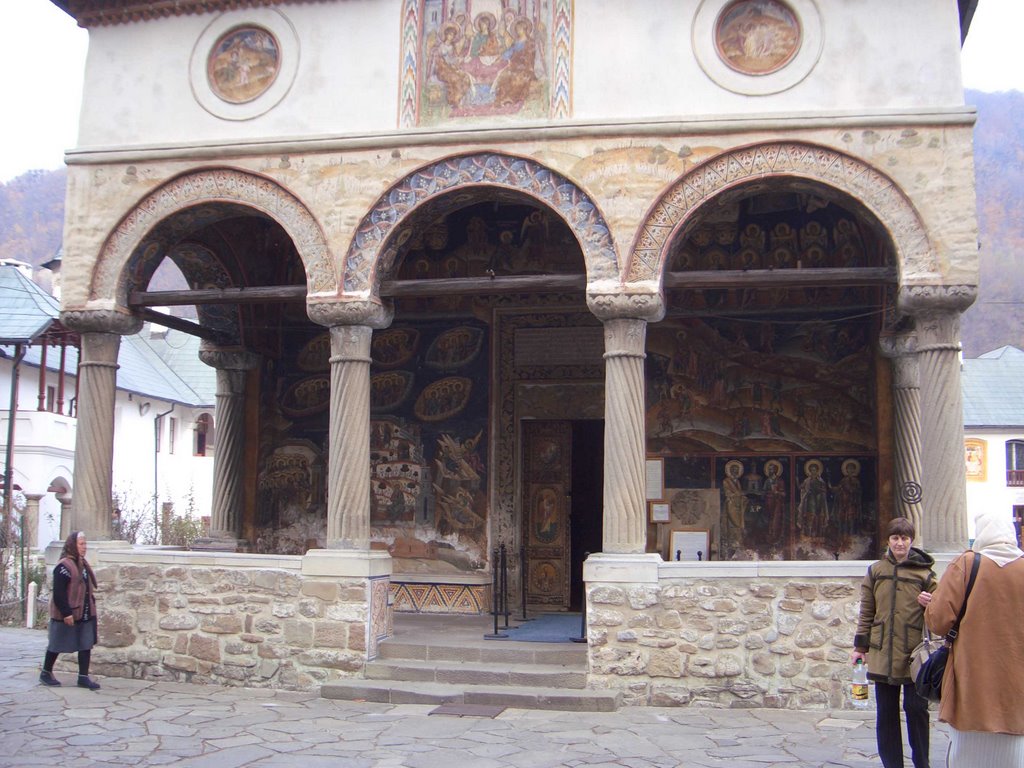
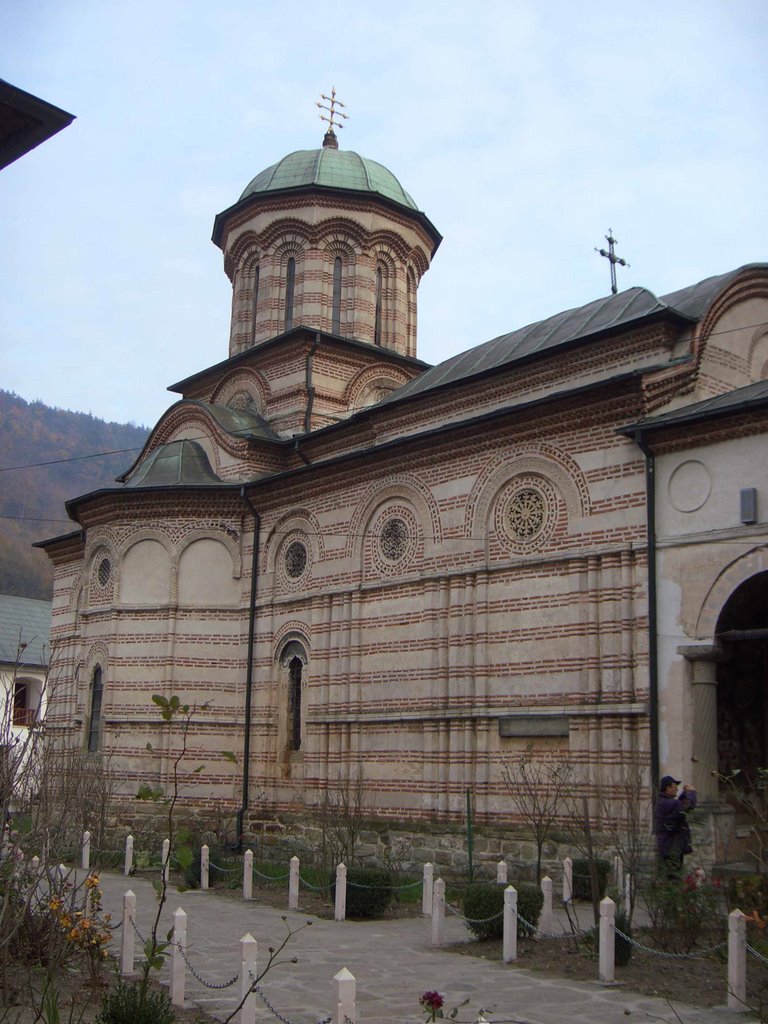

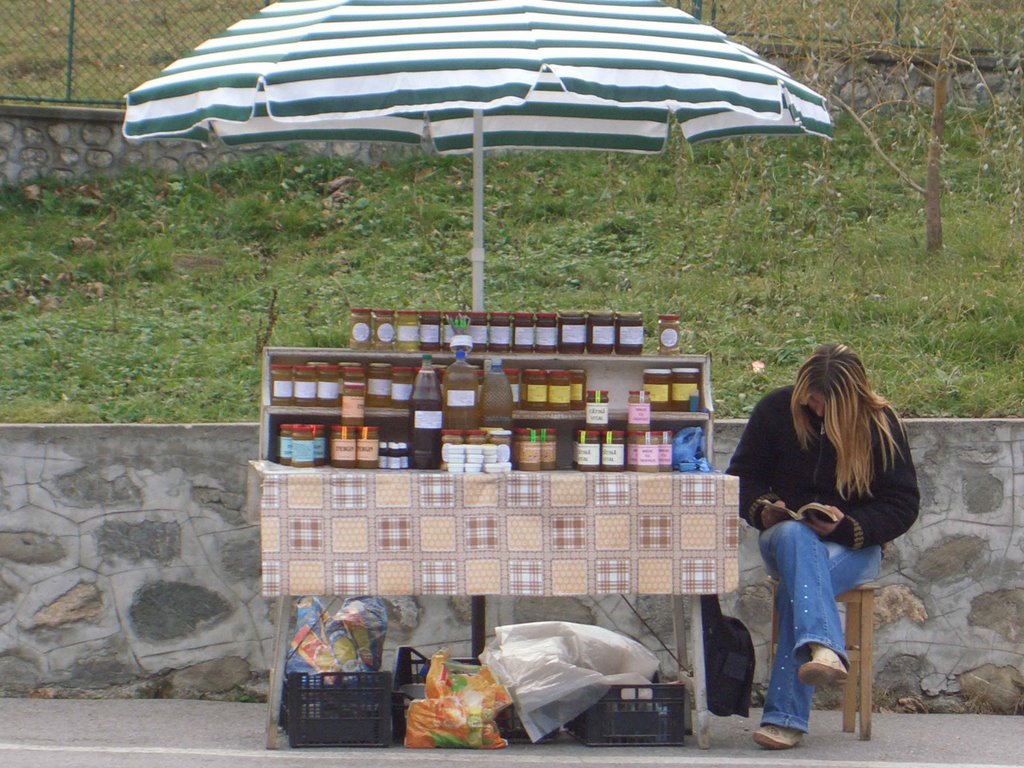

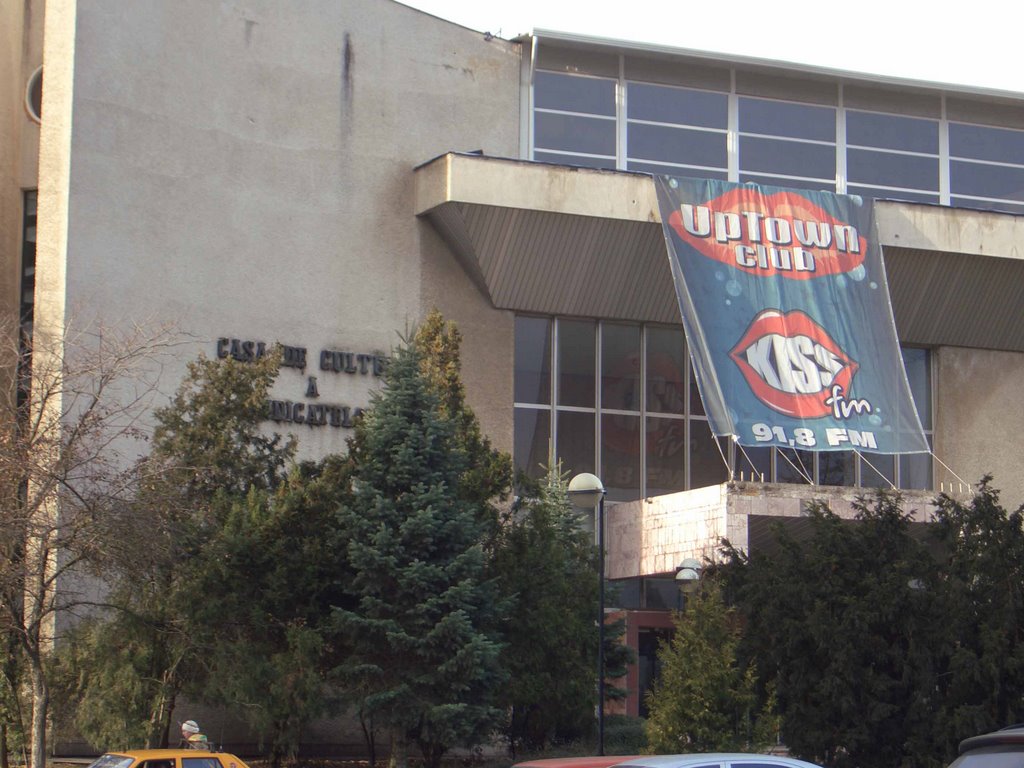
Observations:
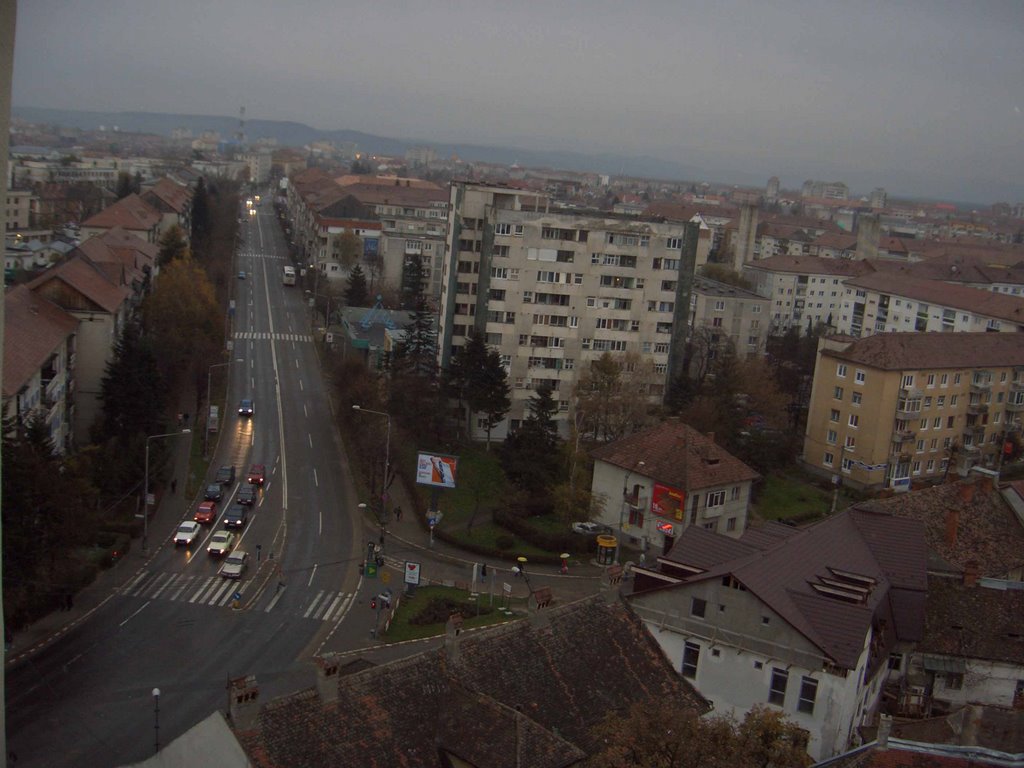
Romania is more paradoxical than other Balkan countries I've visited. Romania will join the EU in January 2007 yet the country struggles with issues of procedural transparency and the "can't do" or "someone else should be responsible for doing it" attitude. I am perhaps overly simplistic when I say that Romania suffers not just from the legacy of Communism but from the despair created by legacy of President Nicolae Ceausescu's world of rationed Communist existence. Perhaps it was the simple act of trying to survive in harsh times that makes people unwilling to be more proactive today. There are certainly entrepreneurs here but the employment laws make it difficult to fire employees, perform relevant employment performance reviews and offer productivity or merit pay increases. Much of this is true elsewhere in the region but the challenges surprise me because of the EU membership.
I spoke for an hour today with a trade unionist who insisted the problems with Radio Romania lie with the government--including influence of former Communists who are too close to the seat of power. I'm sure there's truth in what he says but he was unwilling to acknowledge that the trade unions appear to be stonewalling any changes that they don't fully support. There are about 2,500 employees with Radio Romania in Bucharest plus another 800-900 at the eight regional stations. How many of the Bucharest employees are mere ghost employees, put on the payroll by a brother, father, uncle or mother, and none of the ever show up for work? It is strictly a wild guess of mine but when I examine the amount of programming that seems to come from Bucharest, I can't help but believe that several hundred people may be ghost employees. I could go on but friends tell me they'd rather read about the adventures of travel and not the politics.
The drive from Bucharest was easy and comfortable. Two drivers made the trip...one as far as Sibiu....the other drove to Cluj. The didn't take unnecessary chances when passing and kept their speeds to reasonable rates. I traveled to Tirana, from the Albanian border with Montenegro, and practically saw my life flash before my eyes with the "aggressive" driving.
For dinner tonight I had a wonderful meal of cabbage rolls...cabbage leaves stuffed with meat, rice and spices and baked at a low temperature. I talked through with my host the preparation steps and will repeat this at home. Also, I ate polenta and white cheese as an appetizer. Very good (and traditional) as well.
Last night's dinner included baked cheese--a hard cheese dipped in egg or milk, covered with bread crumbs and fried, and chicken liver and onions served with country potatoes. The country potatoes were first boiled and then grated, mixed with some onion and paprika and fried. Very tasty. Both meals have included Romanian red wine and sparkling water.
The good news is that I only eat two meals a day....breakfast and lunch. Breakfast has been similar to meals I've eaten elsewhere in the Balkans....that means tomato wedges, cucumber slices, and sharp white cheese. Again, wonderful!
I've not seen much of the city. My hotel is a short walk from the radio stations and too far in the early night of November to walk. Tomorrow I will have a chance to see some of the city.
There's a small grocery store a short distance from my hotel. I'm going to walk over there and see what's on the shelves!
Romania is more paradoxical than other Balkan countries I've visited. Romania will join the EU in January 2007 yet the country struggles with issues of procedural transparency and the "can't do" or "someone else should be responsible for doing it" attitude. I am perhaps overly simplistic when I say that Romania suffers not just from the legacy of Communism but from the despair created by legacy of President Nicolae Ceausescu's world of rationed Communist existence. Perhaps it was the simple act of trying to survive in harsh times that makes people unwilling to be more proactive today. There are certainly entrepreneurs here but the employment laws make it difficult to fire employees, perform relevant employment performance reviews and offer productivity or merit pay increases. Much of this is true elsewhere in the region but the challenges surprise me because of the EU membership.
I spoke for an hour today with a trade unionist who insisted the problems with Radio Romania lie with the government--including influence of former Communists who are too close to the seat of power. I'm sure there's truth in what he says but he was unwilling to acknowledge that the trade unions appear to be stonewalling any changes that they don't fully support. There are about 2,500 employees with Radio Romania in Bucharest plus another 800-900 at the eight regional stations. How many of the Bucharest employees are mere ghost employees, put on the payroll by a brother, father, uncle or mother, and none of the ever show up for work? It is strictly a wild guess of mine but when I examine the amount of programming that seems to come from Bucharest, I can't help but believe that several hundred people may be ghost employees. I could go on but friends tell me they'd rather read about the adventures of travel and not the politics.
The drive from Bucharest was easy and comfortable. Two drivers made the trip...one as far as Sibiu....the other drove to Cluj. The didn't take unnecessary chances when passing and kept their speeds to reasonable rates. I traveled to Tirana, from the Albanian border with Montenegro, and practically saw my life flash before my eyes with the "aggressive" driving.
For dinner tonight I had a wonderful meal of cabbage rolls...cabbage leaves stuffed with meat, rice and spices and baked at a low temperature. I talked through with my host the preparation steps and will repeat this at home. Also, I ate polenta and white cheese as an appetizer. Very good (and traditional) as well.
Last night's dinner included baked cheese--a hard cheese dipped in egg or milk, covered with bread crumbs and fried, and chicken liver and onions served with country potatoes. The country potatoes were first boiled and then grated, mixed with some onion and paprika and fried. Very tasty. Both meals have included Romanian red wine and sparkling water.
The good news is that I only eat two meals a day....breakfast and lunch. Breakfast has been similar to meals I've eaten elsewhere in the Balkans....that means tomato wedges, cucumber slices, and sharp white cheese. Again, wonderful!
I've not seen much of the city. My hotel is a short walk from the radio stations and too far in the early night of November to walk. Tomorrow I will have a chance to see some of the city.
There's a small grocery store a short distance from my hotel. I'm going to walk over there and see what's on the shelves!
Tuesday, November 14, 2006
Whew. It's been a long day and I need a night's rest but it has been a successful day and I just have to make a few comments. I'm visiting a regional Romania Radio station in Clij, Transylvania. The people have been great. I've met with the management team and we've had good discussions. I'm impressed with the station's operation....they accomplish a lot given their circumstances--tight budgets and a typical post-Communist mix of employees, some you can't fire or otherwise get rid of and others who are pretty good to very good employees.
In most of the countries I've visited, former government enterprises are stuck with all of the former employees who worked at the business and there's no way to fire them--even if they show up for work and do nothing. There's also no way to give performance pay increases to employees either--not unlike my own work situation.
I've had interesting insights into the nature of people in Romania. It's said that one generation was sacraficed in the fighting of two world wars. Another generation was lost to Communism. Now the question is whether the next generation will thrive or be lost in years of transition as the country tries to get on the right path.
Romania Radio is a national radio service that covers almost all of the country--probably 98%. The service produces programming for listeners but doesn't actually own the broadcast transmitters that distribute their programs. Those are held by the national telephone service. It was all part of the paranoid former dictator's plan to decentralize control and avoid potential threats by groups who might try to take over the radio system. At one point in the late 1980s, Romania Television broadcast for only two hours per day--and that was mostly news about the president. A Romanian joke was that the first hour was a reminder to watch the second hour for news about the president.
I'm pleased to be here. It has been a good learning experience. I hope tomorrow to be able to talk with the station management about ad sales, employee performance reviews and job descriptions....plus a discussion about audience research.
Enough for now.
In most of the countries I've visited, former government enterprises are stuck with all of the former employees who worked at the business and there's no way to fire them--even if they show up for work and do nothing. There's also no way to give performance pay increases to employees either--not unlike my own work situation.
I've had interesting insights into the nature of people in Romania. It's said that one generation was sacraficed in the fighting of two world wars. Another generation was lost to Communism. Now the question is whether the next generation will thrive or be lost in years of transition as the country tries to get on the right path.
Romania Radio is a national radio service that covers almost all of the country--probably 98%. The service produces programming for listeners but doesn't actually own the broadcast transmitters that distribute their programs. Those are held by the national telephone service. It was all part of the paranoid former dictator's plan to decentralize control and avoid potential threats by groups who might try to take over the radio system. At one point in the late 1980s, Romania Television broadcast for only two hours per day--and that was mostly news about the president. A Romanian joke was that the first hour was a reminder to watch the second hour for news about the president.
I'm pleased to be here. It has been a good learning experience. I hope tomorrow to be able to talk with the station management about ad sales, employee performance reviews and job descriptions....plus a discussion about audience research.
Enough for now.
Greetings from Transylvania! I'm in the heart of Romania and it's a rainy and cold morning. What's the difference between Romania and the U.S.A.? In the U.S., a city named Transylvania would be filled with tourist joints playing on the Dracula theme. In Transylvania, Romania, there's minimal tourist play on the Dracula name--though the regional history is a prominent part of the region and heritage. I will add that I did see a billboard for one Dracula-themed motel.
On the way here (I'm in the city of Cluj), we traveled by car from Bucharest and passed probably 20 horse or oxen drawn wagons on the highway. I saw probably another 15-20 in the fields. Agriculture is a hands-on business as it was in the U.S. 100 years ago. People heat with wood instead of electricity or gas in the small villages and rural areas.
I'm standing at the front desk of the hotel using a wired Internet connection...their WiFi is down and my room connection doesn't work....over my shoulder is a television set with an English language soap opera. It's "The Young and the Restless" and airs on a station called ProTV.
More later...have to start the workday.
On the way here (I'm in the city of Cluj), we traveled by car from Bucharest and passed probably 20 horse or oxen drawn wagons on the highway. I saw probably another 15-20 in the fields. Agriculture is a hands-on business as it was in the U.S. 100 years ago. People heat with wood instead of electricity or gas in the small villages and rural areas.
I'm standing at the front desk of the hotel using a wired Internet connection...their WiFi is down and my room connection doesn't work....over my shoulder is a television set with an English language soap opera. It's "The Young and the Restless" and airs on a station called ProTV.
More later...have to start the workday.
Saturday, November 11, 2006
I'm on the road, in Bucharest, Romania. This is my first time here, which is always a great experience...arriving in a new country...getting one more stamp in my passport....and getting a look at how other people live. Romania is in Eastern Europe and shares a common border with other countries I've visited, including Bulgaria, Serbia and Ukraine. Already, I see some parts of the country that are familiar--typically, the look of a formerly Communist country that has been shaking off its past to become a free-market society. But, the people, language, and even the feel of the place aren’t quite the same as Belgrade. I walked a bit last night and enjoyed what I saw.
Romania is usually referred to as a poor country but it seems to have the extremes....Bucharest is thriving and construction is going on everywhere. I passed both Jaguar and BMW dealerships and saw VWs that came from Romania VW/Porsche. There are more cars trying to maneuver around the city than the roads can handle. Car ownership is one sign of prosperity and individual independence--you can buy a car and travel by yourself, in the privacy of your own vehicle. Never mind that you won't travel very quickly because traffic moves so slowly. Yesterday, coming in from the airport--16 kms from the hotel or 14 miles--took about an hour. That's how slowly traffic moved. My Embassy driver told me, yes, he had a car too...a Nissan SUV...but he often took the bus or walked because it was faster. I wanted to ask more about why he had a car--and that particular vehicle--but his English didn't seem strong enough for me to engage him as I might have wanted. Gasoline costs about $1.25 per liter...that's $5 per gallon.
I will travel by car to some other cities and will soon see the extremes. More about that as it unfolds.
I left the Hilton to see part of the city on foot. I think I have an ear infection so I stepped into a pharmacy and bought an antibiotic. No prescription was necessary for me to purchase a five-day supply of amoxicillin. My doctor at home would likely cringe over questions of purity, especially if I told her I paid only about $1.50 for the 15 capsules. I found one of my favorite stops when I travel....an open produce market. It always seems to me to be a good indicator of the economy to see what's for sale in the market. Much of the produce had the "factory produced" look of American produce....clean and shiny....some of it even in plastic containers similar to what we have. Of course, the pineapples were imported...with Delmonte tags attached...as were the kiwi. But the carrots, potatoes, various fall squash, wonderful cabbages and other leafy crops looked to have been grown locally. I went upstairs in an old building that was sort of a shopping mall....full of small booths, each about 10 X 10 (or 3 meters by 3 meters). There seemed to be about four predominant types of shops....clothing--mostly women's clothing, hardware, toiletries, and canned goods. The mix of merchandise seldom varied. Why would someone go to the booth in the back corner to buy when for convenience safe, they could buy from a ground floor vender? I'm always amazed to see these sorts of shops and wonder where their customers come from.
The time difference is 8 hours...it's a little past 10 as I post this. I'll add more shortly but must stop now for a meeting and initial orientation.
Romania is usually referred to as a poor country but it seems to have the extremes....Bucharest is thriving and construction is going on everywhere. I passed both Jaguar and BMW dealerships and saw VWs that came from Romania VW/Porsche. There are more cars trying to maneuver around the city than the roads can handle. Car ownership is one sign of prosperity and individual independence--you can buy a car and travel by yourself, in the privacy of your own vehicle. Never mind that you won't travel very quickly because traffic moves so slowly. Yesterday, coming in from the airport--16 kms from the hotel or 14 miles--took about an hour. That's how slowly traffic moved. My Embassy driver told me, yes, he had a car too...a Nissan SUV...but he often took the bus or walked because it was faster. I wanted to ask more about why he had a car--and that particular vehicle--but his English didn't seem strong enough for me to engage him as I might have wanted. Gasoline costs about $1.25 per liter...that's $5 per gallon.
I will travel by car to some other cities and will soon see the extremes. More about that as it unfolds.
I left the Hilton to see part of the city on foot. I think I have an ear infection so I stepped into a pharmacy and bought an antibiotic. No prescription was necessary for me to purchase a five-day supply of amoxicillin. My doctor at home would likely cringe over questions of purity, especially if I told her I paid only about $1.50 for the 15 capsules. I found one of my favorite stops when I travel....an open produce market. It always seems to me to be a good indicator of the economy to see what's for sale in the market. Much of the produce had the "factory produced" look of American produce....clean and shiny....some of it even in plastic containers similar to what we have. Of course, the pineapples were imported...with Delmonte tags attached...as were the kiwi. But the carrots, potatoes, various fall squash, wonderful cabbages and other leafy crops looked to have been grown locally. I went upstairs in an old building that was sort of a shopping mall....full of small booths, each about 10 X 10 (or 3 meters by 3 meters). There seemed to be about four predominant types of shops....clothing--mostly women's clothing, hardware, toiletries, and canned goods. The mix of merchandise seldom varied. Why would someone go to the booth in the back corner to buy when for convenience safe, they could buy from a ground floor vender? I'm always amazed to see these sorts of shops and wonder where their customers come from.
The time difference is 8 hours...it's a little past 10 as I post this. I'll add more shortly but must stop now for a meeting and initial orientation.
Subscribe to:
Posts (Atom)